
Embrace the Season of Planning As autumn leaves blanket the ground and we prepare for…
Are Home Prices Going to Crash? Read Past the Headline
A housing headline can ruin your morning before the coffee has kicked in. One says prices are falling. The next says you’ve missed your chance. Somehow, both manage to make buying a home sound like a terrible idea.
If you’re asking whether home prices will crash, national forecasts point to modest growth in 2027. A forecast can change, and your local market may move differently. I’d use it as context, then look at the home, the financing, and your plans.
What do the 2027 home-price forecasts actually say?
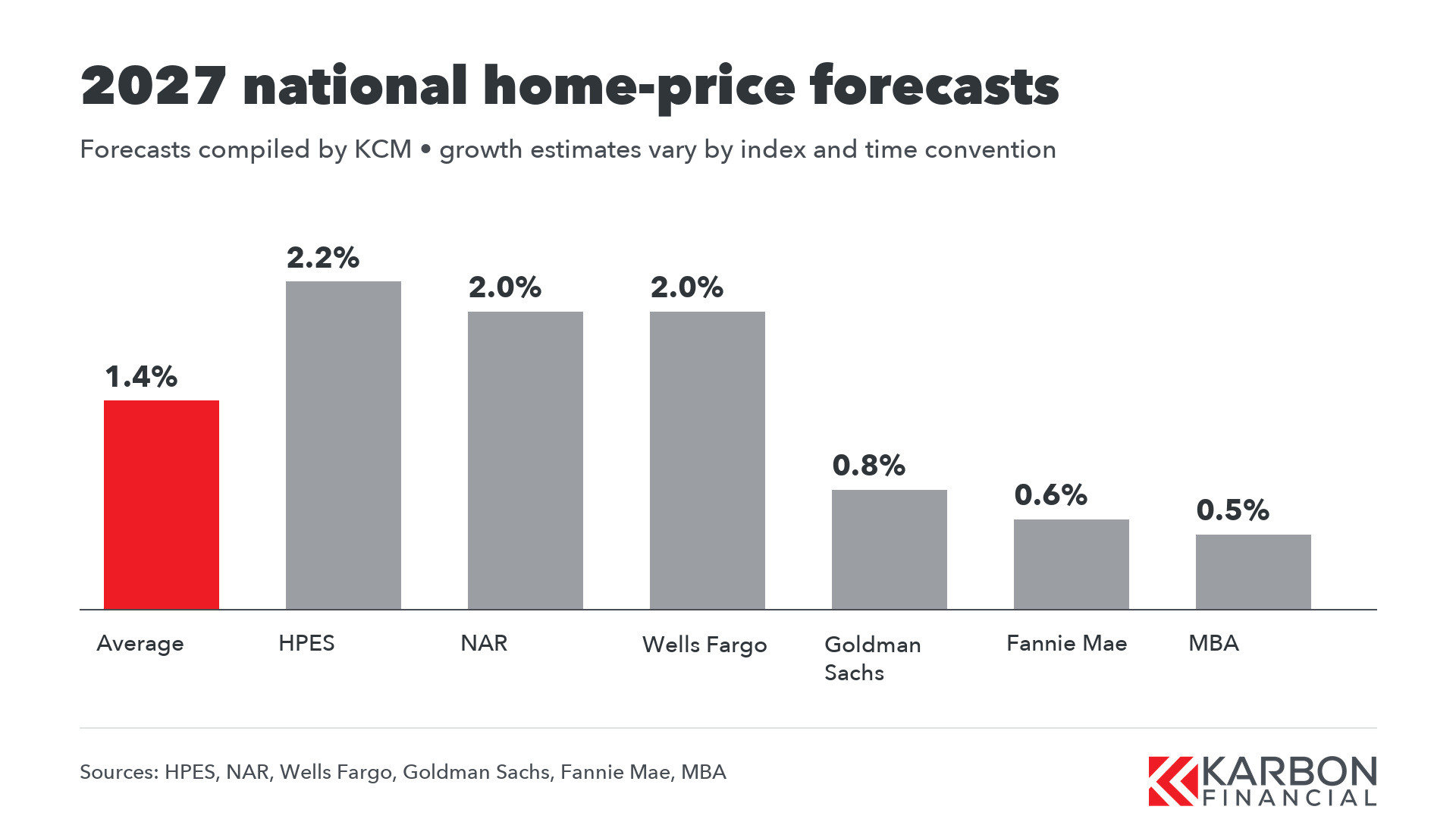
The comparison below shows projected national gains ranging from 0.5% to 2.2%, with an average rounded to 1.4%. Those are forecasts for home-price growth in 2027, not mortgage rates or a promised return on a purchase.
The estimates shown are HPES at 2.2%, NAR at 2.0%, Wells Fargo at 2.0%, Goldman Sachs at 0.8%, Fannie Mae at 0.6%, and MBA at 0.5%. The Fannie Mae estimate is a fourth-quarter-to-fourth-quarter change. Different forecasters may use different indexes and measurement conventions, so treat the average as a broad comparison.
A slowdown in growth and a drop in prices are different things. So are an asking-price reduction and a decline in the value of every house nearby. A seller can lower an ambitious list price even as comparable homes still sell for more than they did a year ago.
Before reacting to a headline, check the location, the time period, and the measure being used. A monthly change, an annual change, and a forecast answer different questions.
Do rising foreclosures signal a housing crash?
If the concern is another 2008, compare the numbers with 2008. ATTOM’s historical chart shows 1,332,991 U.S. properties with foreclosure filings in the first half of that year. Its first-half 2026 report counted 227,548. That is about 83% fewer properties with filings than in the same period of 2008, even though the 2026 count rose 21% from a year earlier.
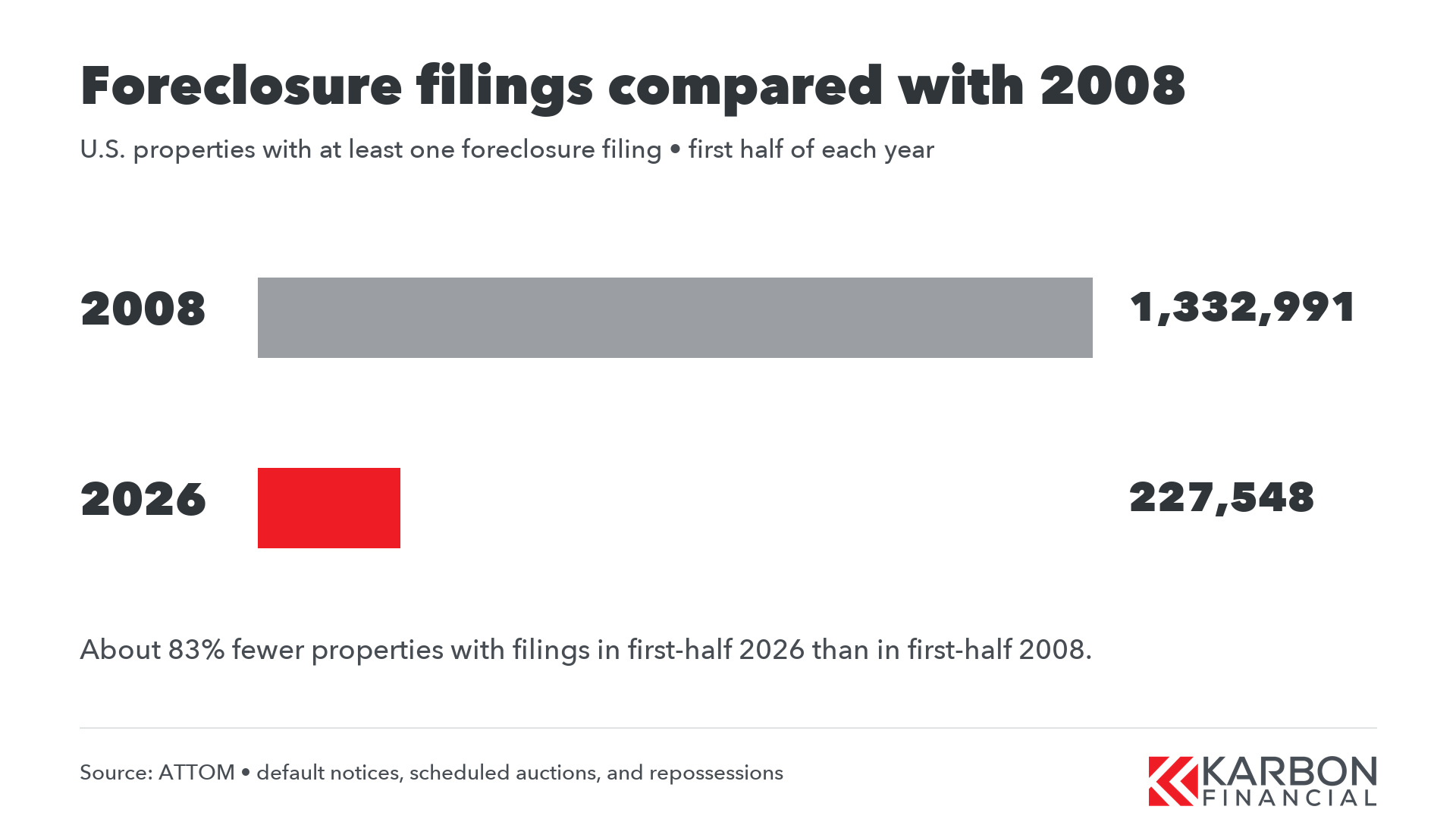
A filing also doesn’t automatically mean a bank has taken ownership of a home. ATTOM’s measure includes default notices, scheduled auctions, and repossessions. Looking at the count, the category, and the comparison period gives you more to work with than the word “surging.”
Would a recession automatically push prices down?
FHFA and NBER historical data show national home price increases during five of the six recessions they selected. The exception is the Great Recession, when its chart shows an 8.9% decline. The accompanying chart preserves all six observations.
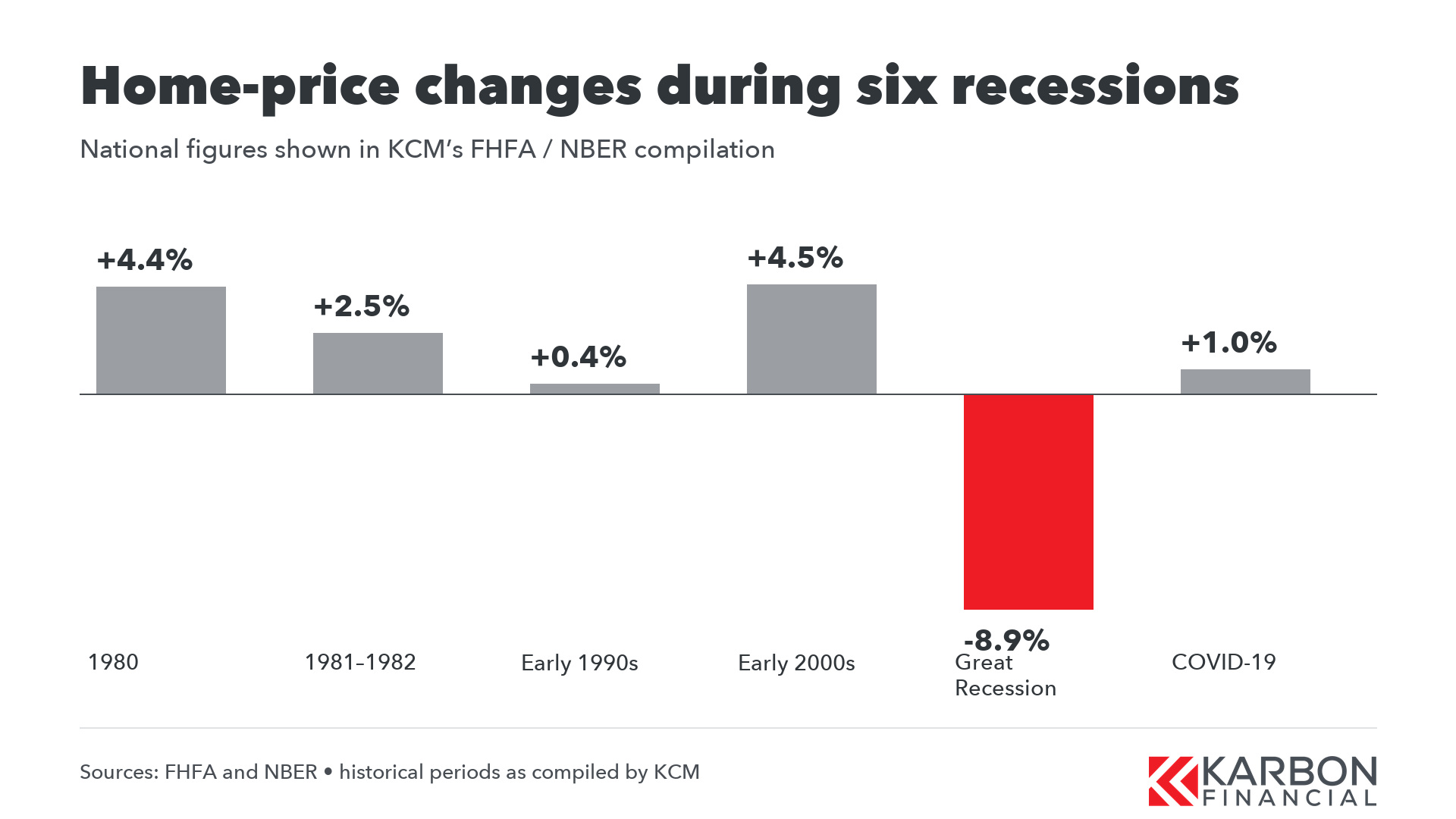
That history helps explain why a recession forecast alone isn’t enough to predict what a house will sell for. It also doesn’t tell us how a future downturn would affect your job, your income, or your neighborhood.
What should a California buyer do with this information?
Start with your own numbers. What is the full payment, including taxes, insurance, mortgage insurance (if applicable), and HOA dues? How much cash would you have after closing? How long do you expect to own the home?
Then work with your agent on the property-specific questions. How long has it been listed? What have similar homes actually sold for? Are sellers helping with closing costs or buydowns? Those details can affect your options well before a national forecast changes.
Our article on waiting for a lower mortgage rate explains how a price reduction, closing-cost credit, and rate buydown can affect the same purchase differently.
At Karbon Financial, we have access to 100+ wholesale lenders. We can compare financing options around the property, your cash, and the payment you want to live with. The goal is to understand the deal well enough to decide whether it works.
Thinking about buying in California? Let’s compare your financing options before a headline makes the decision for you.
A quick answer before you go
Should I wait for home prices to crash? I wouldn’t build a homebuying plan around a crash prediction. Compare local prices, payment terms, cash required, and your expected ownership period. Waiting can be the right choice when those numbers or your timing don’t fit.
Sources

Related Posts