
The VA home loan advantage gives Veterans and active-duty service members access to one of…
Before You Wait for a Lower Mortgage Rate
If the mortgage rate were the only number that mattered, my job would be a lot easier. You’d send me a screenshot, I’d give you a thumbs-up or thumbs-down, and we’d both get on with our day.
I’d still want to know what you’re paying for the house, how much cash you need to close, and what you’ll have left in the bank afterward. I’d also want to know what the seller is willing to do. That last part can change the deal more than you’d expect.
So if you’re waiting for rates to come down, fair enough. Before you put the whole search on hold, let’s look at what you might be able to negotiate today.
Lower rates can mean more competition
When mortgage rates fall, more buyers may come off the sidelines. If they’re all making offers on the same homes, you may have to pay more to get the one you want. A higher purchase price can eat into the monthly savings from a lower rate. If the price goes up enough, you could end up with a higher payment anyway.
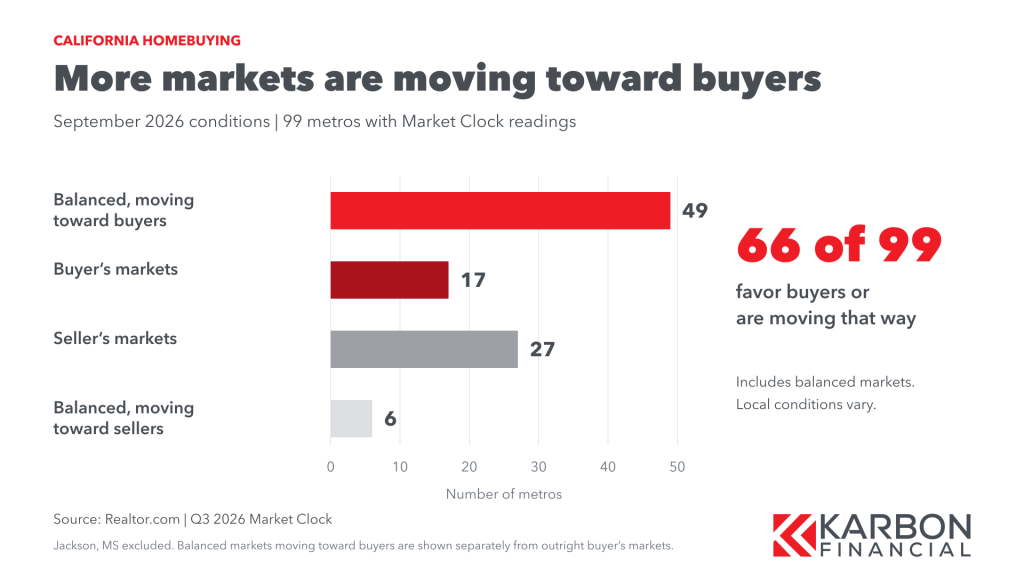
In Realtor.com’s Q3 2026 Market Clock, 17 of the 99 rated metros were buyer’s markets. Another 49 were balanced but moving in buyers’ favor. That’s roughly two-thirds trending toward buyers or already there.
Even within California, there’s no single answer. Riverside and Bakersfield were early buyer’s markets in the report. Los Angeles was balanced and moving toward buyers. San Francisco and San Jose were still seller’s markets. A national headline can tell you where to look. Your agent can tell you what’s happening on the street where you want to buy.
What can the seller help with
Redfin’s data showed concessions in 44.7% of transactions in its U.S. sample in the three months ending August 31, 2026, up from 42.6% a year earlier. That includes help with repairs, closing costs, or a mortgage buydown. A lower sale price is counted separately.
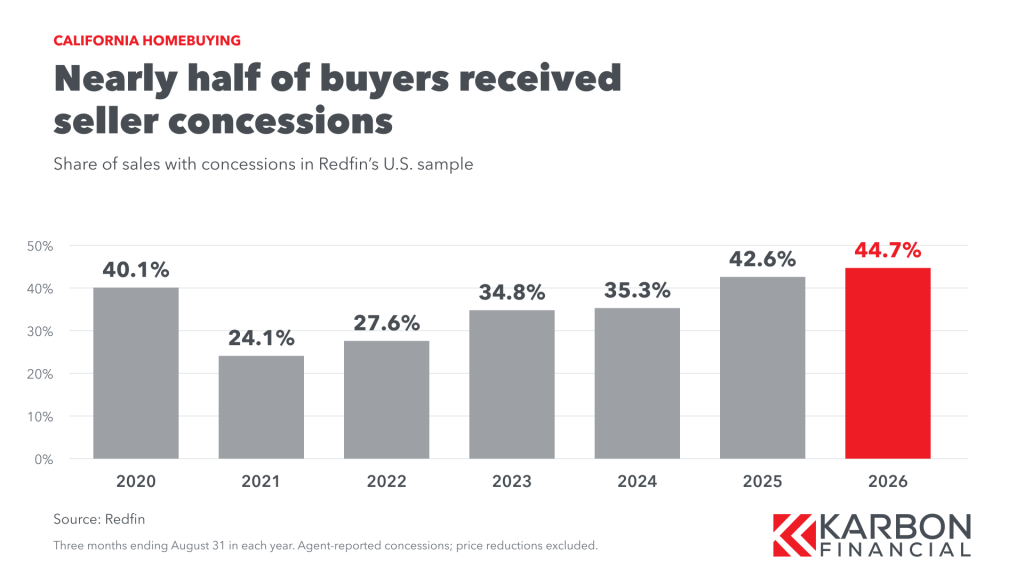
That figure comes from reports by Redfin buyers’ agents nationwide. It doesn’t tell you what a particular seller will agree to. If a home has been sitting, the price has already come down, or an inspection turns up work that needs doing, ask your agent what may be worth negotiating.
A lower price is the obvious ask. It can also mean a smaller loan or down payment, depending on how you structure the purchase. But if you’re more concerned about what’s left in your checking account after closing, a credit toward eligible costs may be more helpful. The water heater that needs to be replaced, unfortunately, won’t care how well you negotiated the purchase price.
Have your lender check the credit before you put it in the offer. How much you can use depends on your loan and eligible costs. On conventional loans sold to Fannie Mae, a seller credit can’t cover your down payment or required reserves.
Two kinds of buydown and two different results
A permanent buydown uses discount points at closing to get a lower interest rate than you’d get on an otherwise comparable loan without points. If the loan is fixed, you keep that lower rate for as long as you keep the loan. An eligible seller credit can help pay for the points. How much of a rate reduction you get depends on the lender and market pricing. I’d compare it with using that same credit for closing costs, especially if you may sell or refinance before the lower payment has much time to help. CFPB guide to discount points
A temporary buydown uses money set aside at closing to cover part of your early mortgage payments. Dollar for dollar, a seller-funded temporary buydown can often lower your monthly payment more during the buydown period than putting the same amount toward a permanent rate buydown or negotiating an equal price reduction. That’s because the seller’s contribution is concentrated in those early payments.
The rate on your loan stays the same, and your share of the payment goes up as the subsidy steps down or ends. For loans that follow Fannie Mae’s rules, you qualify at the full loan rate. I’d start with the full payment to make sure it fits your budget. Then I’d compare what you’d pay during the buydown and over the time you expect to keep the loan.
The numbers I’d run before you make an offer
If you have a home in mind, let’s compare what happens with a lower price, a closing-cost credit and a buydown your loan allows. For each, I want you to see how much you’d bring to closing, what you’d pay each month, what you’d have left afterward and what the loan could cost over the time you expect to keep it.
Include property taxes, homeowners insurance, mortgage insurance (if applicable), and any HOA dues in the monthly total. There’s a difference between a payment you qualify for and one you’d be happy to make every month.
Fannie Mae’s October 2026 forecast didn’t project much relief in rates through 2027. That could change. If rates do fall, you might get a better payment, but you could also face more competition or find sellers less willing to offer credits. If the deal only works because you’re counting on a refinance later, I’d pass. A future refinance depends on rates, your finances, the property, and the costs at the time.
At Karbon Financial, we have access to 100+ wholesale lenders, so we can shop competitive rates and compare loan options for your situation. Your agent can help you decide what to ask the seller for. We’ll work with them to show you what that request would actually do for your financing.
If you’re thinking about buying in California, let’s run the numbers together. If buying makes sense for you, you’ll know why. If waiting makes more sense, that’s a useful answer too.

Related Posts

